
Golf & Brain Special - day 2. Oh yes! Old golfers brains are working better.
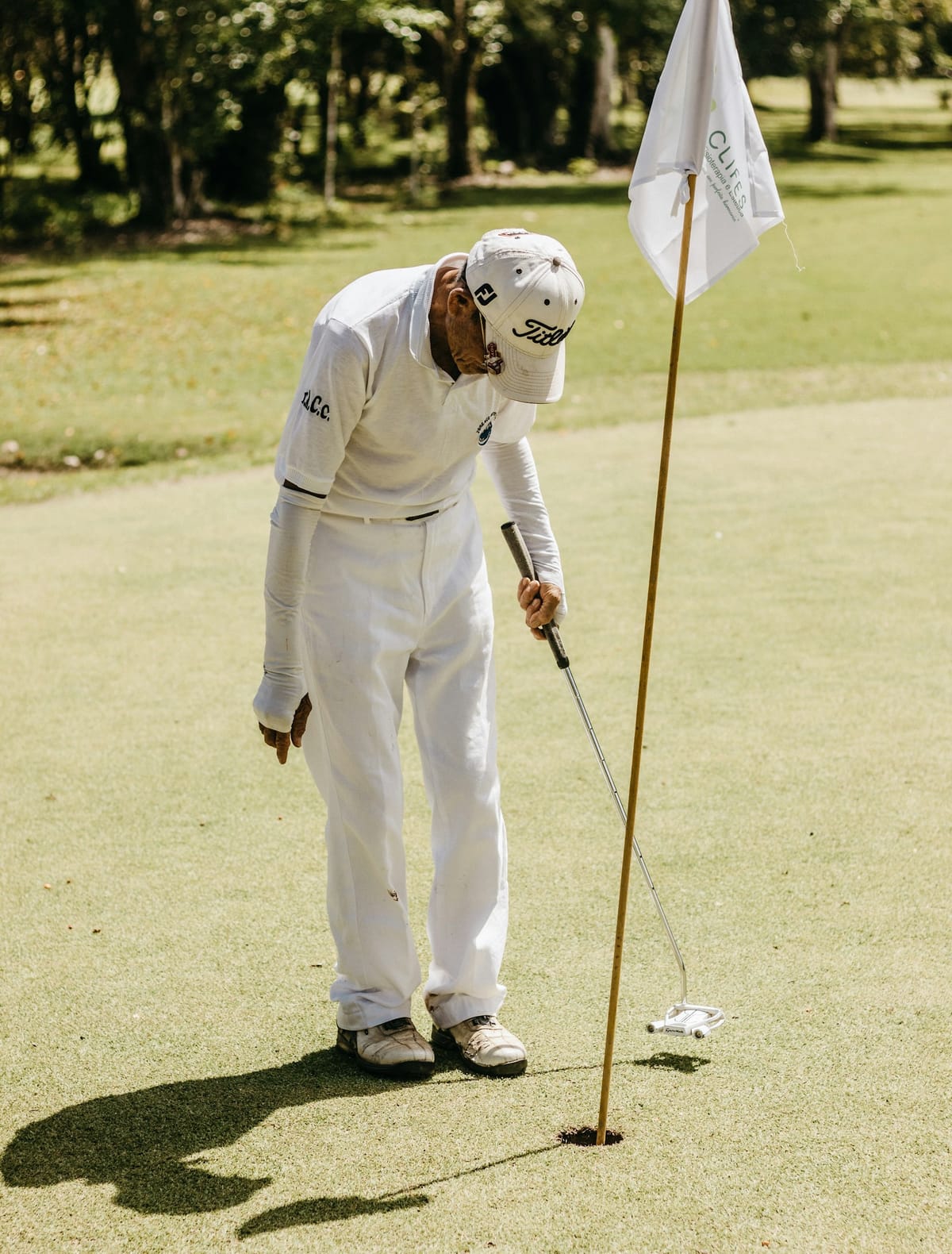
Golf engages neural systems in ways that many everyday activities do not. Each hole requires ongoing planning, prediction and adaptation.
You assess wind, elevation, ball lie and your own previous shots. You integrate visual information with motor output and adjust your technique accordingly. This blend of mental and physical activity likely stimulates brain regions that support a healthy mind.
New research shows that playing golf can sharpen cognitive function in older people by engaging both the body and the brain.
Read here and learn how strategic movement, judging distances, and moderate aerobic activity work together to support healthy brain aging.
The moving brain - maing my case for golf
As the global population ages, exercise has become one of the most reliable lifestyle tools for protecting the brain, and studies repeatedly show that regular movement can help preserve processing speed, attention and executive abilities in older adults.
What has been less clear is whether certain types of exercise may be especially suited to an aging brain. Golf is an intriguing candidate because it blends moderate aerobic movement with continuous mental engagement.
Unlike stationary or monotonous exercise, golf creates a continually shifting environment that prompts the brain to plan strategies and adjust your technique from shot to shot. During a round of golf, the brain must update internal models from moment to moment.
Walking the course adds another layer of stimulation. The terrain changes, and players navigate uneven ground while making real-time decisions about pace and positioning, judging distances en route.
These features align well with what neuroscience suggests protects cognitive health. Activities that combine moderate aerobic demand with cognitive challenge tend to foster neuroplasticity. The brain responds not only to the movement itself but also to novelty, complexity and the need to coordinate multiple systems at once.
And as an additional gain - regular golfers also accumulate long-term physical activity across the season, which supports cardiovascular function and thus brain perfusion. Better blood flow enhances nutrient delivery and waste removal in neural tissue, which may all very well help preserve cognitive health over time.
Someone sat down and made the study
This mix of physical and cognitive demands is very different from simple steady walking, which makes golf a useful model for understanding how the brain responds to more complex activity in older adults.
A new study explored this by examining how a single round of golf affects brain function in healthy seniors. They tested executive functions with a classic neuropsychological tool: the Trail Making Test, which measures processing speed, attention and mental flexibility.
Researchers also measured two chemical messengers in the brain, brain-derived neurotrophic factor and cathepsin B, molecules known to support brain plasticity - the brain's ability to adapt to changes.
The golf experiment
The study recruited twenty-five older golfers with an average age of sixty-nine years. These participants were physically active, experienced in golf and in good general health.
They completed three different exercise sessions on separate days: an eighteen-hole round of golf, a Nordic walking session and a standard walking session. All activities were performed outdoors at each person’s natural pace. The golf round covered more distance and time than the other two activities, but all three counted as moderate aerobic exercise.
Before and after each activity, participants underwent blood sampling and completed the Trail Making Test. The test has two parts: part A focuses on attention and processing speed, while part B requires set-shifting, a mental skill that allows rapid switching between tasks.
Both parts are sensitive to age-related cognitive decline, making them useful for detecting short-term changes in executive function.
Blood samples were analyzed for brain-derived neurotrophic factor and cathepsin B. These molecules have attracted scientific interest because they appear to increase after exercise and are thought to promote neuroplasticity, learning and memory.
Sharper thinking after a round
Across all exercise types, including golf, participants completed the Trail Making Test more quickly after the activity than before. This suggests that even a single bout of moderate aerobic movement can produce a measurable boost in cognitive performance in older adults.
Golf produced the same immediate gains in these basic skills as the two walking conditions. The overall improvement in total test time shows that the round of golf produced a meaningful cognitive lift.
Interestingly, the golfers in the study completed the tests much faster than the averages typically seen in older adults. This raises the possibility that regular play may support long-term brain health by keeping visual skills, motor skills and attention sharp.
The strategic demands of golf—judging distances, choosing shots and adapting to variable environments—may act as continuous training for brain networks.
Or golfers are just smarter than other people to begin with?
Brain messengers behind the movement
While the cognitive improvements were clear, the biological markers told a more complex story.
Levels of brain-derived neurotrophic factor did not rise immediately after golf. A similar pattern appeared after the walking conditions. For older adults, this may reflect the body’s use of the molecule during exercise rather than the release into the bloodstream during the exercise.
However, an interesting delayed pattern emerged. Roughly forty hours after the first exercise session, brain-derived neurotrophic factor levels increased in participants who had performed Nordic walking, and in the golf group.
This delayed elevation fits with earlier findings showing that the molecule can peak many hours after activity and may remain stable for up to two days. It is possible that the combination of movement, coordination and cognitive challenge in golf contributes to this later rise, promoting improved brain plasticity in the days following the practice. A bit like muscle growth after weight training, which does not happen immediately but develops in the days following the workout.
Cathepsin B showed slight increases after all exercise types but without statistical significance. Research on this molecule is still developing, and its immediate response to exercise in older adults is not well established.
Golf = better mental health
The study documents that a round of golf immediately improves cognitive skills.
Interestingly, the regular golfers in the study already performed very well at baseline, suggesting they had better cognitive function than non-golfers of the same age. Their routine golf activity reflects a lifestyle that naturally supports healthy brain aging.
It also reflects a broader point: sports that feel enjoyable and socially meaningful are easier to sustain over years, making them more powerful tools for long-term cognitive health than short bursts of high-intensity routines.
Golf may deliver these benefits in a uniquely engaging package. It blends strategic thought, motor precision, outdoor movement and social interaction—four ingredients known to strengthen cognitive resilience.
Go golf!
About the paper that inspired:
First author: Julia Kettinen, Finland
Published in: BMJ Open Sport & Exercise Medicine, October 2023
Link to paper: https://bmjopensem.bmj.com/content/9/4/e001629


Comments ()